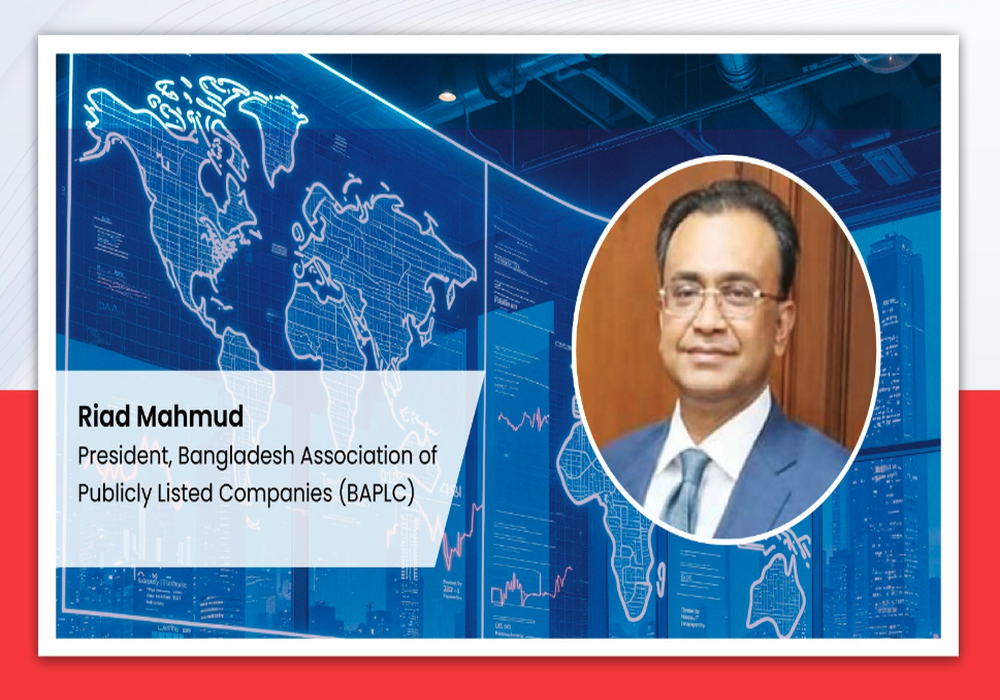
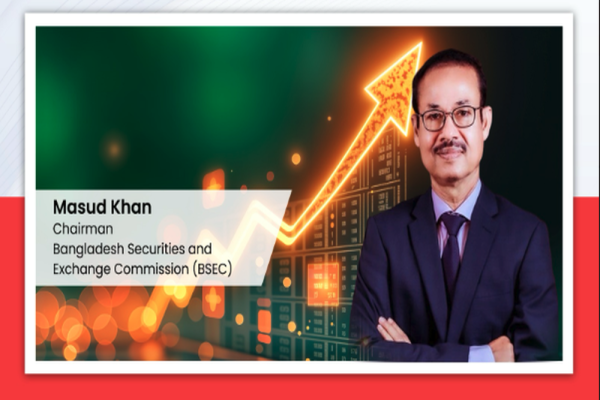
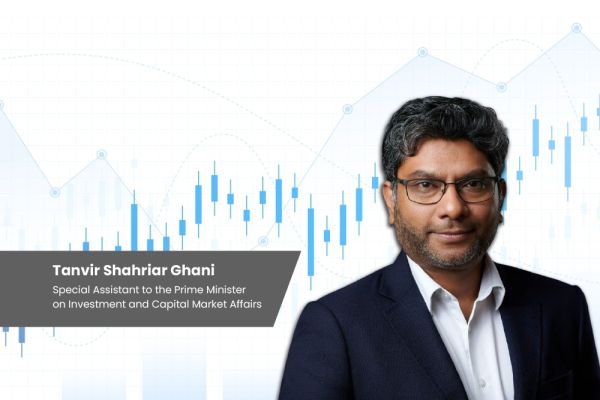
Bangladesh stands at an important juncture in the development of its capital market. Despite significant economic growth over the past two decades, the stock market has yet to develop into a deep, diversified and institution-driven source of long-term financing. Weak investor confidence, limited availability of quality securities, governance concerns, inadequate institutional participation and declining foreign investment have constrained its potential.
The reform agenda now taking shape presents an opportunity to change this trajectory. The objective should not simply be to raise stock prices or attract short-term capital. Rather, Bangladesh needs to build a market where domestic and foreign investors have confidence in its rules, institutions, information and enforcement mechanisms.
The new BSEC Commission: From regulatory oversight to market transformation:
The appointment of a new Bangladesh Securities and Exchange Commission (BSEC) in June, 2026 has created a new opportunity to accelerate capital-market reform. The Commission has articulated an agenda centred on restoring investor confidence and developing a transparent, resilient and institution-driven capital market rather than focusing merely on short-term movements in market indices.
The Commission has identified weak enforcement, inadequate market depth, insufficient quality listings, limited institutional participation and declining foreign investment as major structural weaknesses.
Investor confidence is fundamentally built on trust, transparency and predictability. A modern capital market requires effective surveillance, credible enforcement mechanisms and consistent and impartial application of rules.
Recent initiatives by the Commission indicate a stronger focus on technology-driven surveillance, enforcement against market irregularities, strengthening the Capital Market Tribunal, modernizing rules and regulations, investor education and institutional capacity building. The Commission has also taken steps to modernize the IPO framework, with greater emphasis on transparency, disclosure, quality financial reporting, fair valuation and investor protection.
JADESH SEC TIES AND EYE
The proposed Corporate Governance Rules, 2026 also seek to strengthen board accountability, independent directorship transparency and disclosure, regulatory compliance, minority shareholder protection and broader corporate responsibility. Effective implementation of these reforms could significantly improve governance standards and investor confidence.
Increasing the supply of quality securities:
One of Bangladesh's fundamental capital-market challenges is the limited supply of high-quality listed securities. Foreign institutional investors generally seek companies with strong fundamentals, sound corporate governance, adequate free float, reliable financial reporting and sufficient market liquidity.
Therefore, bringing fundamentally strong companies to the market should be at the centre of the reform agenda
Encouraging large domestic companies, multinational corporations and profitable state-owned enterprises to list could significantly improve market depth and investor choice.
The introduction of direct listing could further broaden the route through which established companies access the stock exchange, provided that appropriate disclosure, valuation and investor-protection safeguards are maintained. BSEC has already initiated consultations on a draft direct-listing framework.

Making Bangladesh more attractive to foreign investors:
For foreign investors, market opportunity alone is not enough. They need ease of entry, ease of exit and confidence in repatriating capital.
Bangladesh therefore needs to simplify account opening, KYC procedures, fund transfers, custody arrangements, settlement and repatriation. Recent steps by Bangladesh Bank to simplify share-transfer and repatriation procedures for non-residents are encouraging and should be extended through coordinated action involving Bangladesh Bank, BSEC, CDBL, the exchanges and other relevant institutions.
A truly investor-friendly market should allow an international investor to understand the rules, open an account, invest, receive dividends, sell securities and repatriate proceeds through a transparent and predictable process.
Diversification and Market Infrastructure:
A resilient capital market cannot depend primarily on equities. Bangladesh needs a broader ecosystem comprising corporate bonds, government securities, mutual funds, ETFS, REITs, Sukuk, derivatives and commodity-related products, supported by robust risk-management infrastructure.
The operationalisation of Central Counterparty Bangladesh Limited (CCBL), development of a commodity exchange and introduction of new products are important steps toward creating a more sophisticated market.
Technology should also become a central pillar of reform through digital BO account services, e-KYC, Al-based surveillance and potentially blockchain-enabled post-trade infrastructure.
Corporate Governance: The Foundation of long-term investment:
Foreign investors place considerable emphasis on governance because it determines how effectively shareholder interests are protected. Bangladesh must therefore strengthen board accountability, independent directorship, related-party transaction rules, audit quality, financial reporting and minority shareholder protection.
The objective should be to create a culture where disclosure is treated as an obligation to investors, not merely a regulatory requirement.rate governance and market stability.
Equally important is strengthening the institutional investor base. Pension funds, insurance companies, mutual funds and asset managers should play a larger role in the market. Strong institutional participation can improve price discovery, corporate governance and market stability.
From "Attracting Foreign Investors" to "Retaining Foreign Investors":
Bangladesh should rethink its traditional approach of attracting foreign investment primarily through roadshows and promotional campaigns. While such initiatives have a role to play, sustainable foreign investment will come only when the capital market itself becomes genuinely investable, transparent, predictable and competitive.
The emphasis on bringing fundamentally strong companies to the market is therefore important. Foreign investors do not need to be persuaded to invest in a good market, they need confidence that the market is good.
That confidence is built through credible institutions, strong corporate governance, reliable financial reporting, effective surveillance, consistent enforcement, efficient infrastructure, product diversification and predictable regulatory policies.
A window of opportunity:
Bangladesh's economic transformation, expanding private sector, growing middle class, export capacity and infrastructure development provide a strong underlying investment story. The capital market should become the mechanism through which domestic and international investors participate in that growth.
The reform opportunity is therefore much larger than simply repairing the stock market. It is about building a credible financial architecture for Bangladesh's next phase of economic development.
If reforms succeed in strengthening governance, improving disclosure, increasing the supply of quality securities, simplifying foreign investment procedures, diversifying products and ensuring effective enforcement, Bangladesh can gradually reposition its capital market as an attractive destination for long-term international capital.
The ultimate goal should be simple: a capital market where confidence is earned through institutions, transparency and performance-not created temporarily through sentiment.
For Bangladesh, rebuilding confidence is not merely a market objective. It is an economic imperative. For foreign investors willing to take a long-term view, a successfully reformed Bangladeshi capital market could offer an increasingly compelling opportunity to participate in one of South Asia's important emerging economies