We are living in a time where technological innovation is rapidly transforming our lives, work, and economy. In particular, digital technologies and artificial intelligence (AI) are reshaping the nature of business, labor demand, and market structures. These changes have accelerated even further following the COVID-19 pandemic. Technological transformation is pushing the future forward faster than we can predict.
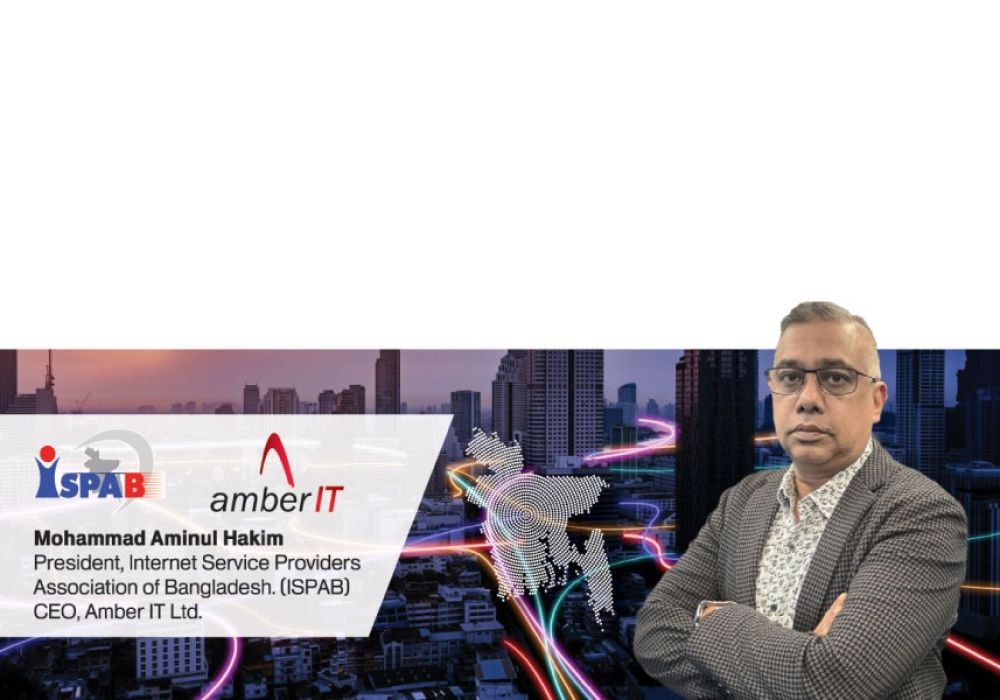
In 2025, internet connectivity is no longer a luxury. It is the backbone of modern progress. In Bangladesh, we are witnessing a profound transformation that is connecting people, businesses, institutions, and ideas through digital networks in ways that were unimaginable a decade ago. As the President of the Internet Service Providers Association of Bangladesh (ISPAB), I have seen firsthand how this digital infrastructure and fixed broadband are restructuring our economy and creating new opportunities for millions.

The dominance of mobile internet in Bangladesh's digital journey is clear, but the potential of fixed broadband remains largely untapped. Currently, the number of mobile internet users in Bangladesh is nearly 120 million, representing the majority of total internet users in the country. In contrast, the number of fixed Broadband users is only around 15 million. According to the latest report from the Bangladesh Telecommunication Regulatory Commission (BTRC), the total number of internet users has exceeded 135 million. Of these, approximately 90% of mobile users rely on mobile internet, while the remaining 10% are connected via fixed Broadband.
This disparity poses a challenge for the country's digital future, but it also presents an opportunity. Studies show that if only 10% of a country's total internet users are on fixed broadband, it can contribute up to 1.3% to GDP. Fixed broadband, with its stability, is far more effective than mobile internet in areas like higher education, health- care, business, and innovation. So why is this sector still limited in Bangladesh? Key reasons include infrastruc- tural bottlenecks, cost pressures, and policy constraints.
To realize the vision of Bangladesh's digital economy, fixed broadband must be prioritized. Expanding fiber-optic networks, offering affordable packages, and ensuring access in rural areas through public-private partnerships are essential. This will not only accelerate economic growth but also strengthen the digital skills of the country's youth. Our goal should be to ensure fixed broadband spreads nationwide, not just in urban centers, this will be the cornerstone of Bangladesh's digital economy.
In OECD (Organization for Economic Co-operation and Development) countries, 70% of internet users rely on fixed broadband. These countries see productivity gains of over 30%. Fixed broadband penetration rates are 96% in South Korea, 92% in Japan, 93% in Singapore, 95% in Iceland, 89% in Spain, and nearly 94% in the United States.
Today we understand that connectivity is not a luxury. It is a powerful driver of national economic growth. By "connectivity dividend" we mean that every new connection, every high-speed connectivity, and every reliable and affordable service brings measurable benefits to the country's economy and society. Connected Bangladesh, Progressive Bangladesh.
We are already witnessing these benefits in Bangladesh:
• E-commerce and online services are creating new employment opportunities, especially for youth and women.
• Freelancers are taking local skills to the global market.
• Small entrepreneurs and rural businesses are reaching customers beyond the country's borders through digital platforms.
Every connection strengthens the economy; this is the connectivity dividend.
In education, high-speed internet has enabled digital classrooms, online universities, and skill development platforms. Today, even students in remote areas have access to the same knowledge base.
In healthcare, telemedicine and digital diagnostics are reducing disparities in service, especially during the pandemic when connectivity saved lives.
Although urban-centered digital development is significant, large parts of rural Bangladesh remain underserved. This represents our biggest opportunity.

To ensure the full connectivity dividend, every village, school, household, and business must come under fixed broadband coverage. This requires:
• Affordable transmission networks
• Simple, business-friendly telecom policies
• An investment-friendly environment and protection for local entrepreneurs
When rural areas are connected, Bangladesh's productivity and innovation will reach a new level.
The digital economy of the future will go beyond basic connectivity. High-capacity, fast, and stable networks are needed for cloud computing, Al, loT, fintech, and smart manufacturing. To accelerate this, we must:
• Expand Fiber-to-the-Home (FTTH) networks
• Strengthen 4G and roll out 5G in remote areas
• Build data centers and CDN infrastructure
• Ensure cybersecurity and digital stability

Bangladesh stands at the threshold of a historic opportunity. With a new government, young workforce, entrepre- neurial mindset, and technological capability, we have all the elements in place. The objectives are clear:
• Increase internet penetration
• Improve service quality
• Create community networks
• Establish government-funded fiber banks
• Connect Bangladesh with additional submarine cables
• Build a safe and sustainable digital ecosystem

When connectivity succeeds, Bangladesh succeeds-more income, more jobs, more opportunities, a more competitive nation. The connectivity dividend is measurable, tangible, and a right for all. Let's embrace it together.