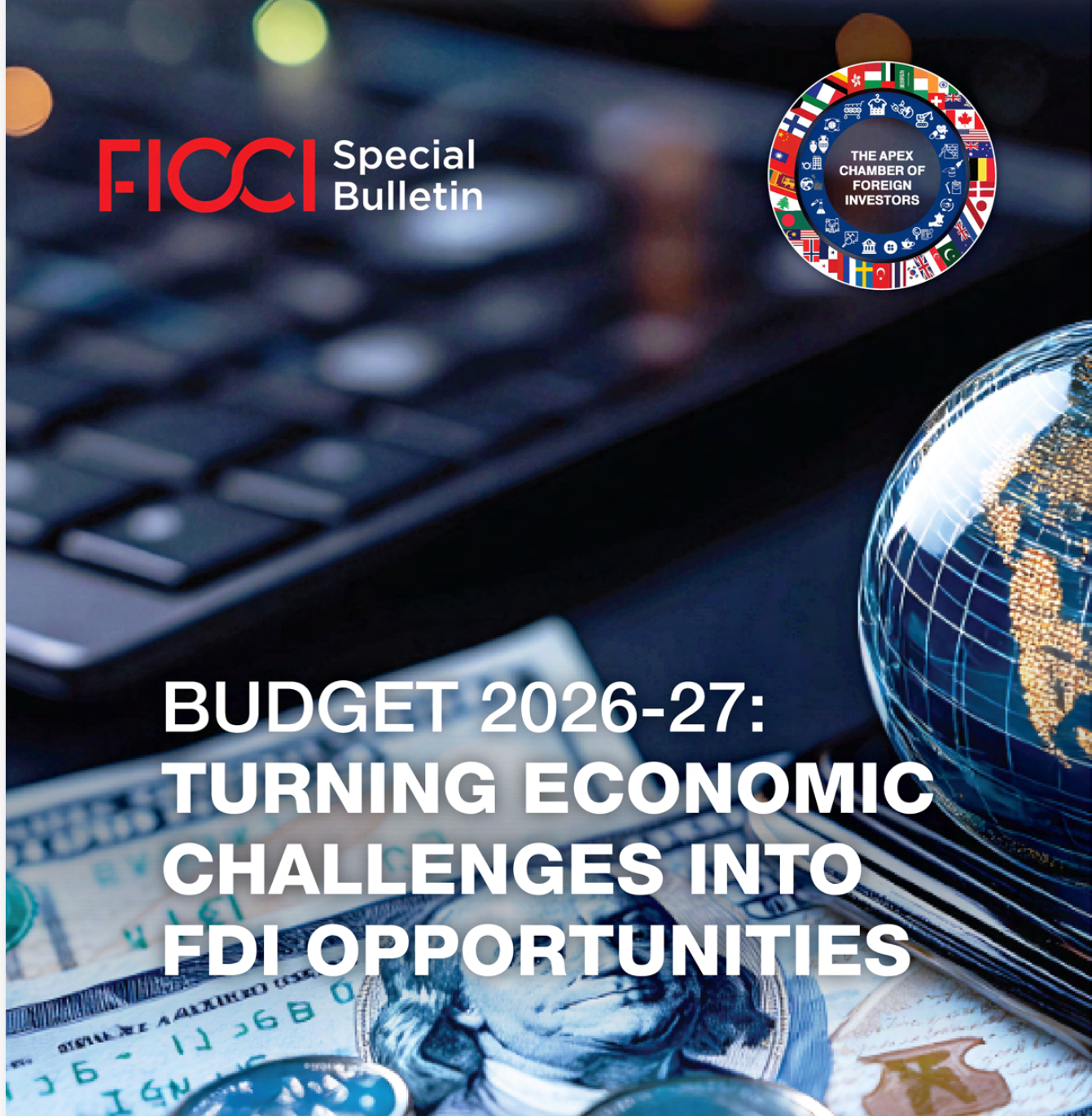
Budget 2026–27: A Defining Moment for Investment, Growth, and Fiscal Credibility in Bangladesh
As Bangladesh prepares for the Budget 2026–27—the first under the new government—the business community is closely watching for clear signals on investment, employment, and long-term economic stability. Alongside restoring macroeconomic balance, there is a strong expectation to expand social safety nets and increase investment in healthcare and education—both essential for inclusive and sustained growth.
Early indications suggest a clear intent to reset economic momentum and reduce barriers to investment. The focus on skills development, entrepreneurship, job creation at home and abroad, agricultural support, healthcare strengthening, financial sector discipline, and regulatory reform reflects an ambition to address immediate pressures while laying the foundation for long-term growth.
Key Development Priorities and Growth Drivers
The emphasis on healthcare, rural development, infrastructure, and education is particularly significant. These sectors not only determine social outcomes but also directly influence productivity, workforce readiness, and investor confidence.
For foreign investors and multinational companies, these priorities shape:
- The availability of skilled labour
- The resilience of supply chains
- The overall stability of the business environment
A key expectation from the upcoming budget is stronger alignment between employment generation and investment inflows. While expanding domestic and overseas job opportunities is important, sustainable employment creation will depend on increased domestic and foreign investment.
Fiscal Credibility as the Foundation of Investor Confidence
Bangladesh’s FY2026–27 budget will serve as a critical signal of policy direction and economic credibility. While discussions indicate an expansionary stance alongside ambitious revenue targets, the real test will be implementation capacity and fiscal discipline over the medium term.
Revenue mobilisation remains a central challenge. Strengthening confidence will depend not only on targets but on:
- Predictable and coherent tax reforms
- Broader tax base expansion
- Improved compliance systems
- Reduced policy uncertainty
From an investor perspective, effective tax reform is not about higher rates, but about fairness, simplicity, and predictability.
Priority Areas for Tax and Fiscal Reform
Several key reform directions stand out:
- Broadening the tax base to reduce pressure on compliant taxpayers and improve revenue stability
- Rationalising minimum tax structures, especially to protect SMEs and value chain partners
- Encouraging cashless transactions through incentives and reduced corporate tax rates for non-trading companies
- Expanding VAT rebate eligibility to support formal business activity and reduce compliance friction
- Improving VAT system efficiency by removing restrictive conditions and simplifying processes
- Ensuring customs valuation transparency based on actual invoice values to reduce disputes and uncertainty
These reforms would reduce compliance uncertainty and create a more investment-friendly operating environment.
Standards Harmonisation and Trade Facilitation
Investor confidence is also strongly influenced by execution predictability after investment decisions are made. For foreign investors, misalignment between local and international standards often leads to hidden costs such as:
- Approval delays
- Unclear regulatory timelines
- Repeated compliance requirements
- Higher operational complexity
These inefficiencies effectively act as “hidden taxes” that reduce competitiveness without generating public revenue.
As Bangladesh prepares for post-LDC graduation, alignment with global standards becomes increasingly critical. Greater harmonisation can:
- Shorten approval cycles
- Reduce compliance uncertainty
- Enable faster technology adoption
- Improve global market competitiveness
A Partnership-Led Growth Path
Budget 2026–27 has the potential to become a defining milestone—signaling Bangladesh’s shift from stabilisation toward investment-led, job-creating, and inclusive growth.
By strengthening reform momentum in taxation, trade facilitation, and regulatory standards, the country can unlock higher-quality foreign direct investment and enhance competitiveness in the post-LDC era.
Ultimately, the success of the budget will depend not only on ambition, but on execution, predictability, and strong government–industry partnership to build a stable and investable economic environment.