
 Admin
Admin
 December 29, 2025
 (0) Comment


Admin
December 29, 2025
(0) Comment
Introduction: The Correlation of Growth
Having served at the Bangladesh Telecommunication Regulatory Commission (BTRC) and now steering the technology strategy at Link3 Technologies Limited, I have witnessed the broadband ecosystem from both the policy table and the trenches of the last mile.
The premise of the "Connectivity Dividend" is undeniable. World Bank statistics have long established a robust correlation between broadband penetration and economic prosperity specifically, that a 10% increase in broadband penetration can yield a significant boost in GDP growth, particularly in developing economies. But connectivity is more than a statistic; it is the backbone of digital inclusiveness. It determines how effectively a nation fares in the global digital economy, dictating the efficiency of our supply chains, the reach of our educators, and the capability of our workforce.
However, to truly reap this dividend, we must confront the structural inefficiencies that currently throttle our potential.
The Opportunity: Beyond Basic Access
To drive growth in Bangladesh's digital economy, we must move the conversation beyond simple "access" to "quality and sustainability."
The digital economy is fueled by high-speed, reliable data. Bangladesh has a burgeoning youth population and a massive gig economy - our freelancers are bringing in millions in foreign currency. However, their productivity is tethered to the stability of their connection. By stabilizing our broadband infrastructure, we directly empower the SME sector, e-commerce, and the freelance community.
 Furthermore, the connectivity dividend is realized when we bridge the gap between digital islands. We have the potential to decentralize our economy, allowing businesses to operate efficiently outside of Dhaka. But this requires a shift in how we view infrastructure: not as a luxury, but as a critical utility comparable to electricity or water.
The Hurdle: The cost of Fragmentation
Despite our potential, the fixed broadband sector operates under a regulatory framework that is, paradoxically, both heavy-handed and indistinct.
1. The Myth of "More is Better" in Licensing
Currently, the fixed broadband market suffers from hyper-fragmentation. There are simply too many licenses. Between Nationwide, Zonal, and Category licenses, the market is diluted to the point of inefficiency.
Unlike the mobile telecommunications market, which is a captive market with a limited number of operators allowing for massive, concentrated investment, the ISP market is heavily fragmented. This fragmentation "kills" the market. It reduces the incentive for large companies to inject significant foreign direct investment (FDI) because the Return on Investment (ROI) is constantly threatened by unregulated, hyper-local competition that often bypasses compliance standards. Without a consolidation of licenses, we will struggle to build entities with the financial muscle to upgrade our national infrastructure.
2. The Infrastructure Crisis: Active vs. Passive Sharing
One of the most significant barriers to reducing the cost of broadband is the restriction on equipment sharing. Currently, there is no clear demarcation or regulatory support for the sharing of active resources.
Consider the economics: Every master equipment unit - routers, switches, OLTS - is imported. We buy these using precious foreign exchange reserves. When multiple ISPS build redundant active infrastructure in the same building or area, we are effectively wasting national foreign currency.
If regulations permitted and encouraged Active Network Sharing, providers could share the electronic infrastructure while competing on service quality. This would drastically reduce Capital Expenditure (CAPEX). Lower CAPEX means we can offer better prices to the consumer and invest the savings into expanding coverage to underserved areas.
 The Last Mile Nightmare
As a fixed broadband provider, the "last mile" - the final connection to the customer's home or office - is our greatest operational vulnerability.
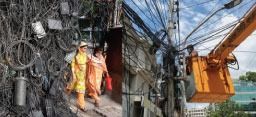
At Link3, we face a recurring financial hemorrhage: we lose approximately 30 Lacs Taka in fiber assets annually. This is not due to obsolescence, but due to the chaotic nature of overhead cabling. Because we are often restricted from laying underground fiber, our cables are exposed to theft, accidental cuts by utility workers, and sabotage.
This creates a cycle of instability. We invest in fiber, it gets cut, service drops, customers suffer, and we spend foreign currency to import more fiber to replace it. A policy shift allowing ISPs legitimate, affordable access to underground ducts is not just an operational need; it is a national economic necessity.
The Path Forward: Improving the Investment Scenario
To secure the connectivity dividend, we need a paradigm shift in regulation. Here is how we can improve the regulatory hardware and investment climate:
• Rationalize Licensing: We must move toward a model of consolidation. Reduce the sheer number of license categories to encourage the growth of strong, compliant, and well-capitalized entities capable of sustaining long-term growth.
• Mandate Active Sharing: The regulator must establish a framework for Active Infrastructure Sharing. This should be viewed as a method to save Foreign Exchange reserves. Sharing active gear reduces the import burden and optimizes network utilization.
• Solve the Right of Way (ROW): We need a unified "Dig Once" policy. ISPs need clear, legal avenues to lay underground fiber to protect assets and ensure 99.9% uptime. The current overhead chaos is unsustainable for a "Connected Bangladesh."
• Clear Demarcation: There must be a strict, enforced demarcation between the roles of NTTNs (Nationwide Telecommunication Transmission Network), IIGS (International Internet Gateways), and ISPs. Overlapping roles create market confusion and stifle specialized investment.
Way Forward
Bangladesh has the demand, the talent, and the ambition to thrive in the global digital economy. The connectivity dividend is within our reach. However, we cannot build a First World digital economy on a regulatory framework that encourages fragmentation and infrastructure waste.
By enabling active resource sharing, protecting our physical assets, and consolidating the market, we can transform broadband from a commodity into a catalyst. The technology is ready; it is now time for the policy to catch up.