
 Admin
Admin
 December 29, 2025
 (0) Comment


Admin
December 29, 2025
(0) Comment
When I travel between Dhaka's commercial centers and the villages of Rangpur or Barisal, I am reminded that a mobile signal today is as essential as electricity or clean water. I have met shopkeepers who manage daily transactions entirely on a smartphone. I have spoken with farmers who receive grain price updates before leaving home, enabling better bargaining power in local markets. I have sat beside students in remote unions learning mathematics and graphic design from YouTube tutorials, hundreds of kilometers from traditional academic institutions. These lived experiences reflect a powerful truth. Connectivity is not only about communication. It is an economic platform that shifts possibilities, expands choice and strengthens resilience across communities.
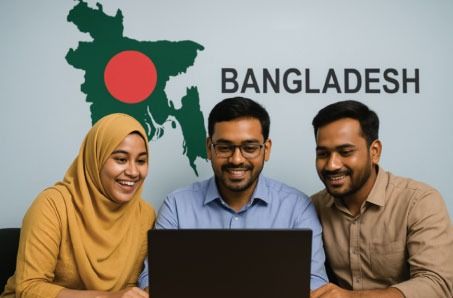
Bangladesh now has one of the most rapidly growing digital populations in South Asia. At the start of 2025, the country recorded 77.7 million mobile internet users, representing 44.5 percent of the population, and 185 million mobile cellular connections which indicates widespread access and multi SIM usage (DataReportal Digital 2025 Bangladesh: https://datareportal.com/reports/digital-2025-bangladesh). Also, Bangladesh started its 5G journey H2 2025 spurring the country's industry and enterprises into IR4.0, and this will be a game changer for Bangladesh. The implications are significant. Connectivity is becoming the infrastructure upon which learning, commerce, service delivery and innovation increasingly depend. Furthermore initiatives aimed at bridging the digital and gender divides are crucial components of the growth story. Public-private collaborations are vital in these efforts, combining the reach and resources of the private sector with government policy to maximize impact.
From Ericsson's perspective, this is the beginning of a structural leap in Bangladesh. The conversation is evolving from how to extend network coverage to how to convert connectivity into productivity, competitiveness and inclusive growth. This connectivity Networks should sit at the heart of national investment as pillar of economic growth engine and treat as critical infrastructure.
Connectivity and Economic Transformation
Across global markets, broadband adoption has a measurable economic effect. Every 10 percent increase in mobile broadband penetration can contribute up to 1.5 percent GDP growth in developing economies** (Ericsson and Imperial College London Economic Impact Study: https://www.ericsson.com/en/reports-and- papers/mobility-report/economic-impact-of-mobile-broadband). This growth comes from improved information flows, more efficient markets, reduced time costs and expanded access to workforce opportunities.
Bangladesh provides a clear example. The digital financial services ecosystem is now deeply embedded in daily life. The Mobile Financial Services ecosystem processed over 563 million transactions worth USD 109 billion during the 2022 to 2023 financial year (PaymentsCMI Fintech Landscape Bangladesh: https://www.paymentsc- mi.com/insights/fintech-landscape-bangladesh). Digital payments have strengthened small businesses, expanded credit access for microentrepreneurs and supported the formalization of commerce.

As 4G continues to improve and Bangladesh readies for 5G in H2 2025, digital delivery and Industry 4.0 technologies (5G, edge/cloud, Al, loT) will enable new business models across logistics, healthcare, agriculture, education, manufacturing and retail, reducing costs and expanding reach. Priority opportunities include smart garment factories (robotics, AR for quality/maintenance), ports and logistics (real time tracking and automation at Chattogram and Mongla), precision agriculture (sensor-driven farming), healthcare (telemedicine and clinical loT), and smart city systems (traffic, utilities, surveillance). These shifts should raise productivity, create jobs, attract investment, and improve public services.
The Affordability Imperative
While Bangladesh has made substantial progress in expanding network availability, the next challenge lies in usage rather than coverage. More than 90 percent of the population lives within a mobile broadband footprint, yet a significant share remains offline due to affordability constraints (GSMA State of Mobile Internet Connectivity 2025: https://www.gsma.com/r/mobilefordevelopment/resources/state-of-mobile-internet-connectivity-report -2025/).
Device affordability is the most significant barrier. In many low and middle income economies, import duties, VAT and sector specific taxes can represent 20 to 33 percent of the final retail price of a smartphone, which places entry level devices beyond the reach of millions of low income households (Policy Reforms for Bangladesh, UNDP and PRI 2024: https://www.undp.org/bangladesh/publications/policy-reforms-bangladesh
This is where policy has the capacity to unlock immediate progress.
• Reducing taxes on entry-level smartphones in the USD 30 to USD 60 range would significantly improve affordability.
• Encouraging local assembly and component localization would support domestic industry development.
• Rationalizing VAT on data bundles would allow more citizens to participate consistently rather than occasionally.
For Bangladesh to accelerate digital transformation, connectivity must be both physically available and financially accessible.
 Inclusivity: Reaching Rural and Women Users
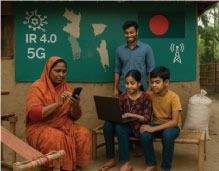
41.6 percent of Bangladesh's population lives in urban areas and 58.4 percent in rural regions, which sustains disparities in network experience and digital uptake (DataReportal Digital 2025 Bangladesh: https://datareportal.com/reports/digital- 2025-bangladesh).
Women face additional challenges. The National Digital Payments Roadmap 2022 to 2025 highlights affordability, digital literacy and availability of safe and culturally accessible transaction points as barriers that reduce women's adoption of digital financial services (Bangladesh Bank National Digital Payments Roadmap: https://www.bb.org.bd/en/index.php/ publication/publictn).
Addressing these divides requires more than connectivity. It requires:
IR 4.0 5G
• Targeted digital literacy programs in rural schools and community centres
• Women focused digital use training and agent networks
• Safe online access and authentication frameworks
• Continued public private collaboration on inclusion
Ericsson believes inclusion creates a multiplier effect, where increased participation in the digital economy supports household income growth, entrepreneurship and improved social mobility.

Industry Collaboration and Investment Climate
Connectivity infrastructure is now a determinant of foreign investment competitiveness. Companies evaluating Bangladesh for manufacturing, logistics, IT services or exports increasingly assess the reliability and quality of digital infrastructure as a core requirement.
Telecom operators and tower infrastructure companies in Bangladesh are advancing fibre deployment, power efficient site modernization and network performance improvements. Regulatory focus on service quality reflects national competitiveness priorities (SAMENA Council Telecom Daily News 2025: https://samenacoun- cil.org/samena-daily).
Shared network infrastructure models have proven effective globally in reducing deployment costs, improving rural coverage and strengthening sustainability outcomes. Ericsson actively supports operators in adopting shared and energy efficient network solutions aligned with Bangladesh's evolving digital and environmental goals.
Looking Ahead: A Joint Agenda for Progress
Ericsson sees four strategic priorities for Bangladesh's continued digital success:
1. Make smartphones universally affordable by rationalizing device taxes and encouraging local assembly ecosystems.
2. Improve network quality and capacity to support cloud services, digital education, telemedicine and advanced enterprise applications.
3. Strengthen digital literacy and service awareness so that connectivity converts into meaningful participation in the digital economy.
4. Reinforce digital trust frameworks including cybersecurity governance, data protection, authentication and consumer confidence mechanisms.
Conclusion
Bangladesh is at a defining moment in its digital journey. The foundations of connectivity are in place. The oppor- tunity now lies in ensuring that every person and every enterprise can access, afford and benefit from the digital economy.
Achieving this requires collaboration. Policymakers, telecom operators, infrastructure partners, financial service providers, innovators and global technology leaders each hold part of the solution.
Ericsson remains committed to supporting Bangladesh in advancing toward a future where connectivity strengthens competitiveness, expands opportunity and empowers every community.