
 Admin
Admin
 January 7, 2026
 (0) Comment



Admin
January 7, 2026
(0) Comment
Building an Inclusive and Future-Ready Bangladesh
Bangladesh's digital economy is expanding faster than ever before. Today, over 75 million people-about 45% of the population-are online [ref: DataReportal 2025]. Almost 55% of households now have internet access [ref. Bangladesh Bureau of Statistics, 2025], while monthly mobile-financial-service transactions consistently exceed Tk 1.5 trillion [ref: Bangladesh Bank, 2025]. Digital payments, e-commerce, and logistics platforms are rapidly reshaping how businesses operate and how consumers interact with brands.
This momentum is more than a technological trend; it is an economic inflection point. The digital economy already contributes roughly 7% of GDP, and projections suggest it could exceed 12% by 2030 if adoption continues at this pace [ref: Oxford Economics 2025 estimate]. For investors, this signals a market primed for scale, innovation, and inclusive growth.
The Retail Paradox
Despite this boom, micro-retailers in Bangladesh-the backbone of everyday commerce-however have not shared equally in the digital dividend. Most of these shops run on physical order capturing by suppliers, guesswork-based inventory management and manual cashflow management.
For years, this system has worked well, highlighting the unassuming yet sharp business acumen of these small retailers, until the marketplace began evolving faster than their capacity to keep pace. Rising consumer demand
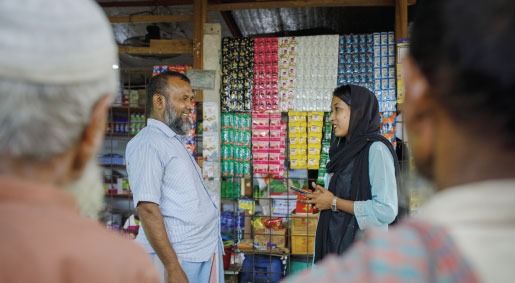
driven by globalisation, increased product assortment, tougher prices and promotion benchmarks from emerging trade formats such as self-service stores and d-commerce have started posing increasingly tough competition to traditional retail. These small retailers often face stockouts, delayed fulfilment, and limited access to promotions due to the lack of working capital. If the cost model is not managed with agility, ever-rising inflation along with a tougher price environment continues to create stress on retail margins and working capital, capping their true growth potential.
In this situation, digitisation has become not just an opportunity, but a necessity. When a retailer can order directly from a phone, have complete visibility of available assortments to order from, and analyse purchasing patterns, it can help them become more proactive. Access to digital trade data also opens doors to credit, insurance, and modern supply-chain networks-critical for an economy where small enterprises drive nearly 28% of GDP (ref: UNIDO-SMEF Brief 2025).
Paving Paths to Possibilities
Unilever Bangladesh Limited (UBL) serves nine out of ten Bangladeshi households through 20 trusted brands. Its nationwide retail network of 1.3 million retailers offers a front-row view of both the promise and the pain points of traditional trade. It was clear that for a more resilient, inclusive economy, retailers needed to be equipped with future-ready tools.
Therefore, UBL's approach centred on three interconnected innovations that combine digital access, data intelligence, and sustainability.
Lever Bazar is a 24/7 digital-ordering platform that allows retailers to place orders for UBL products directly via smartphone, view real-time availability, and access trade offers without waiting for a sales representative. Today, over 100,000 outlets use this app and have recorded significantly higher sales growth than non-digitised peers. Beyond numbers, it has brought empowerment, transparency and business continuity even in remote or weather-disrupted areas.
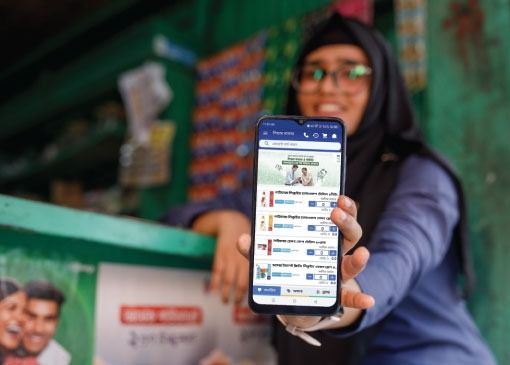
Complementing it, Intelligent Quantum (IQ) uses machine-learning algorithms to generate peer-based assortment recommendations. Since launch, IQ has produced over 300 million predictive insights for over 500K customers, helping retailers plan smarter and avoid costly stockouts. Outlets guided by IQ have experienced differentiated higher growth, but more importantly, using this has helped them to build conviction on data-driven decision-making.
Both platforms create what I call a digi-oracle route-to-market model: digital self-service powered by human advisory. Front end teams can now act as business coaches, using IQ insights to advise retailers rather than simply taking orders. This shift has elevated skills, improved trust, and strengthened the commercial ecosystem.
The third pillar, URefill, extends innovation to sustainability. It enables consumers to refill used bottles of liquid products-reducing virgin-plastic dependency by up to 90% and cutting roughly 500 kilograms of CO2 emissions per tonne of product dispensed. Early pilots, run with UBL's partner BopInc, achieved 93% consumer approval and 43% repeat refills, proving that responsible consumption can be both practical and popular. Currently, in partnership with Omni StateG, there is a plan to scale this innovation to 100 retailers focusing on consumer affordability and user-friendliness.
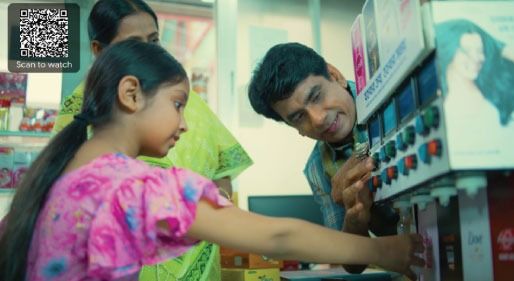
Each of these initiatives proves one point: digitisation and innovation only succeed when it is deep routed in human insights. Retailers must see clear value and consumers must find the experience simple yet rewarding. Through a design with empathy, adoption becomes self-sustaining.
From Retail Digitisation to Economic Inclusion
The impact of these efforts goes beyond Unilever's own network. Every retailer who becomes digitally enabled contributes to Bangladesh's productivity frontier. Digital trade shortens supply chain, reduces waste, and enhances price transparency-outcomes that stabilise inflationary pressures and make the market more attractive to investors.
At the same time, data-enabled retail opens new investment avenues: fintech partnerships can offer micro-credit basis digital transaction history, last-mile logistics ventures can participate in nimble fulfilment models and refill-technology, or manufacturing can partner with circular-economy goals. For a country navigating external headwinds but maintaining structural growth potential, these linkages represent powerful opportunity.
Looking Ahead
As business leaders, we have a responsibility to ensure that digital transformation wave in our environment is equitable and uplifts everyone it touches. Digitisation is not simply an efficiency exercise; it is a bridge between our nation's economic ambition and its social equity.
At Unilever Bangladesh, we believe that progress happens the fastest when technology, purpose, and partnership come together. By empowering retailers through digital tools and championing sustainable innovation, we can build a retail ecosystem that is not only smarter and more competitive-but also fairer and greener.