
 Admin
Admin
 December 23, 2025
 (0) Comment


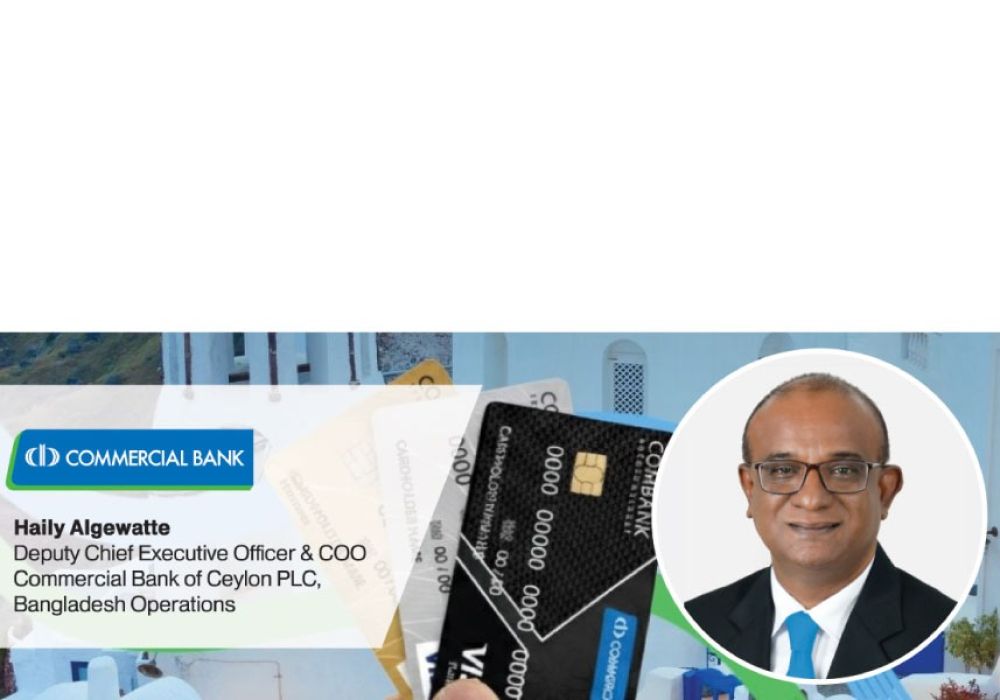
Admin
December 23, 2025
(0) Comment
In an era defined by digital disruption and global integration, connectivity has become the new currency of economic competitiveness. For Bangladesh, one of Asia's fastest-growing economies, the digital revolution is not merely a technological shift but a strategic restructuring of the nation's economic foundation.
Over the past decade, Bangladesh has evolved from a connectivity-deficient nation to a digitally dynamic ecosystem, fueled by mobile penetration, broadband expansion, and fintech innovation. This transformation is driving inclusion, productivity, and new opportunities across all sectors. Today, digital connectivity is no longer just an enabler; it is a catalyst of national prosperity, accelerating financial inclusion, trade competitiveness, and public service efficiency. Guided by visionary regulations, resilient infrastructure, and a maturing fintech landscape, Bangladesh is rapidly advancing towards a cashless, inclusive, and globally integrated digital economy, aligned with its long-term vision.
Digital Infrastructure: The Foundation of Progress
 Bangladesh's digital transformation story begins with its impressive expansion of connectivity. As of early 2024, the country had 188.6 million active mobile connections, exceeding its total population which is a clear indicator of deep mobile penetration. The government's commitment to extending broadband coverage has been pivotal, with 52% of households having internet access by December 2024. A major leap came in May 2025, when Starlink launched its satellite internet service in Bangladesh, introducing high-speed, low-latency internet at BDT 4,200 per month, which represents a game-changing step towards universal digital access, especially for remote areas.
The Fintech Revolution and Digital Payments Boom
At the heart of Bangladesh's connectivity dividend lies on the fintech sector, a powerhouse driving financial inclusion and efficiency. Mobile financial services (MFS) platforms like bKash, Rocket, and Nagad have become integral to everyday transactions, with mobile banking transactions totaling BDT 17.37 trillion in 2024 alone. This momentum has attracted over USD 429 million in venture capital to Bangladeshi fintech firms during 2021-2022, fueling innovation in digital lending, micro-insurance, and payment interoperability.
 Connectivity has also redefined commerce, with the e-commerce market growing from USD 1.7 billion in 2019 to USD 9 billion in 2024 and is projected to expand at a 12% compound annual growth rate (CAGR) through 2027. This boom, enabled by platforms like Daraz, Chaldal, and Sheba.xyz, is empowering small and medium enterprises (SMEs) and stimulating employment.
Public Services Go Digital
Government digitization has also gathered strong momentum. Bangladesh's E-Government Development Index (EGDI) score rose from 0.5189 in 2020 to 0.6570 in 2024, placing it first among all Least Developed Countries. Initiatives such as digital land records, e-tax filing, and e-education platforms have made governance more transparent and efficient, curbing corruption while improving public access to services.
Digital Payments and Inclusion Metrics
 According to Bangladesh Bank data, internet banking account penetration rose from 25.36% in 2019 to 43.82% by March 2025, showing strong consumer trust in online transactions. Agent banking also reached 24 million accounts by mid-2025, processing 27.21 million transactions worth BDT 1,436.9 billion in Q2 2025, including BDT 77.6 billion in remittance inflows. Meanwhile, MFS accounts surged to 239.24 million, with steady monthly growth in transaction volumes, although a mild slowdown was noted in mid-2025.
In parallel, the card payment ecosystem has expanded rapidly with debit, credit, and prepaid cards increasing 140% in issuance and 228% in transaction volume over the past five years. Together, these figures reflect the country's accelerating march toward a digital and cashless economy.
Corporate Digitalization: Integrating with the Global Economy
On the corporate front, digital finance is embedding efficiency and global connectivity. Platforms such as BD-RTGS, Nikash-BEFTN, and API-driven ERP integrations have transformed corporate cash management, enabling faster fund transfers and enhanced transparency. The BD-RTGS system alone processed over BDT 50 trillion in 2024, and another BDT 18.7 trillion in just the first four months of 2025, a striking indicator of the system's robustness.
By extending digital settlements to multiple currencies, including USD, EUR, and CNY, Bangladesh is aligning its financial systems with global best practices strengthening its role in regional and international trade networks.

The Road to a Cashless Bangladesh and the Role of Commercial Banks
While connectivity drives economic inclusion, the next frontier is the creation of a fully cashless financial ecosystem, a strategic pivot spearheaded by Bangladesh Bank. The central bank has expanded the Bangla QR Code system, now adopted by 42 banks, 7 MFS providers, and 3 PSPs, to enable low-cost retail payments nationwide. Moreover, key regulatory innovations like e-KYC, TakaPay (the national card), and the development of Credit and Collateral Registries are strengthening the digital finance ecosystem. This progress is reflected in the metrics:
• Internet banking account penetration rose from 25.36% in 2019 to 43.82% by March 2025.
• Agent banking reached 24 million accounts by mid-2025.
• MFS accounts surged to 239.24 million.
The private banking sector has emerged as a powerful enabler of this cashless vision.

Bridging the Digital Divide
Despite the remarkable progress, ensuring inclusivity remains a continuous challenge. Women in Bangladesh are still less likely than men to own a mobile phone and use mobile internet. Encouragingly, the gender gap in mobile internet adoption has narrowed, thanks to initiatives such as UNICEF's digital training and WEE- Connect's women empowerment programs.
Addressing this divide through targeted policies in education, infrastructure, and access will be key to ensuring that Bangladesh's digital transformation benefits all citizens, and institutions like CBC are committed to ensuring the accessibility and security of their digital platforms to support these goals.

Conclusion: A Digital Nation in Motion
Bangladesh's connectivity revolution is a structural transformation redefining the country's growth trajectory and institutional resilience. The convergence of rural broadband, fintech advancement, Al-enabled banking, and sustainable finance is creating an integrated ecosystem that is reshaping how value is generated, exchanged, and sustained. This signifies a strategic reorientation of Bangladesh's economic architecture-one that is inclusive, transparent, and globally competitive.
Regulators are crafting forward-looking digital policies, financial institutions are accelerating innovation, and citizens are rapidly embracing digital tools. Together, these forces are positioning Bangladesh as a regional model of digital inclusion and financial modernization. The nation is not merely bridging its digital divide; it is forging a digital bridge to the future-one that connects growth with governance, innovation with inclusion, and prosperity with sustainability in a perfectly synchronized rhythm of progress.